
Amsterdam Canal Cruise at Night: What You’ll See & Why It’s Special
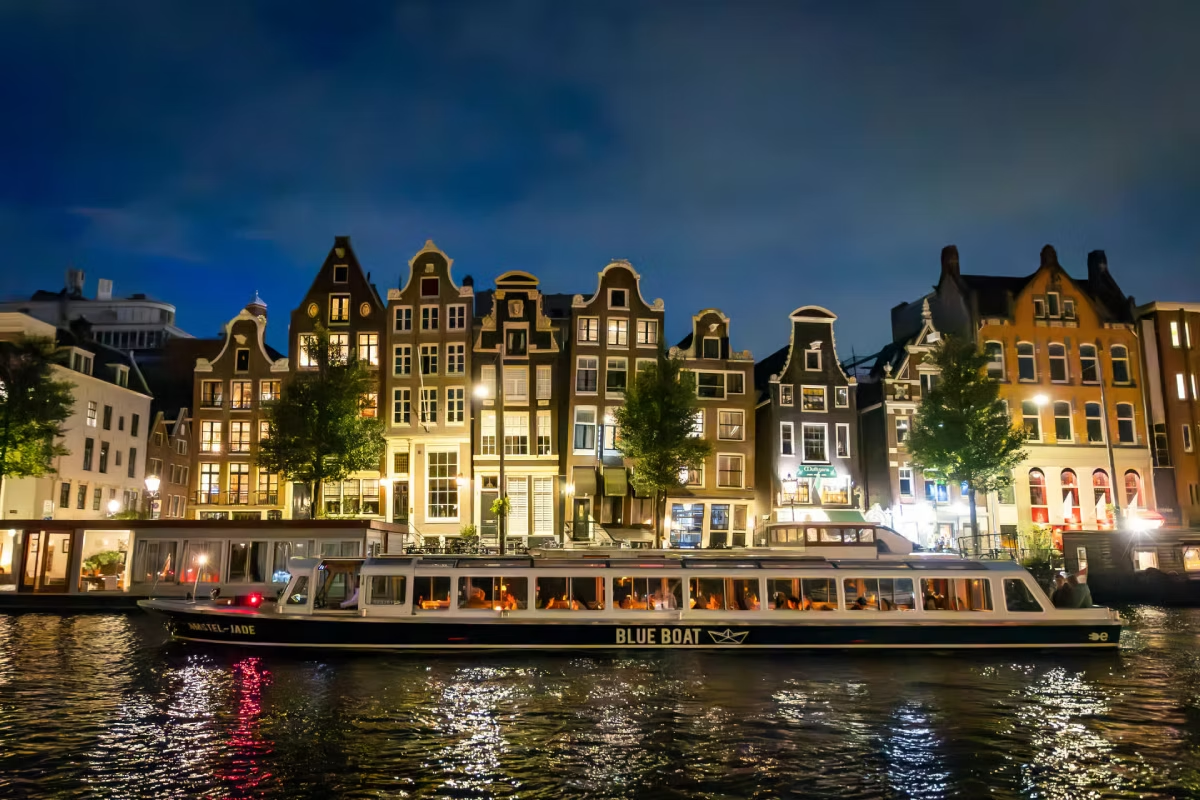
At night, Amsterdam’s canal ring is illuminated by streetlights, bridge lighting, and the warm glow from canal house windows — creating reflections in the canal water that double the visual impact of the city’s architecture. The canal houses, which are architecturally interesting in daylight, become dramatically atmospheric at night. From late November to mid-January, the Amsterdam Light Festival adds large-scale illuminated art installations throughout the canal ring that are specifically designed for evening viewing from the water.
Amsterdam by day is one of Europe’s most beautiful cities. Amsterdam by night on a canal boat is something different and, for many visitors, more memorable. The canal ring changes character completely after dark — the architecture that is objectively impressive in daylight becomes emotionally compelling in the evening, when the interior lights of the canal houses glow through their tall windows and the bridges illuminate the dark water below them.
This guide covers everything that makes a night canal cruise experience in Amsterdam worth doing separately from the daytime version — the specific visual qualities of the canal ring after dark, the best time of year for a night cruise, and the options available for experiencing Amsterdam’s canals in the evening.
Top Tickets
What the Canal Ring Looks Like After Dark
After dark, Amsterdam’s canal ring is illuminated in three distinct ways: the street lamps along the canal banks cast warm pools of light onto the towpaths and the water surface; the canal house windows glow from within, turning the facades from architectural objects into inhabited, domestic scenes; and the bridges are lit from below, their reflections doubling in the canal water. Together these three light sources create a visual atmosphere unique to Amsterdam that cannot be replicated in daylight.
The transformation of Amsterdam’s canal ring from day to night is one of the most significant visual shifts of any city in Europe. Understanding what specifically changes helps explain why an evening or night canal cruise is not merely a variation on the daytime experience but a distinctly different one:
The canal house windows. During the day, the canal houses are read as architecture — the gables, the brick, the facade proportions. After dark, as interior lights come on, they become something else: inhabited scenes visible through tall windows, each canal house a series of lit domestic tableaux. Dutch canal house windows are characteristically tall and uncurtained — a transparency that dates from a cultural tradition of openness — and the evening light from inside turns the facades from objects to be observed into lives to be briefly glimpsed. This quality is specific to the evening and cannot be achieved in daytime.
The bridge illuminations. Amsterdam’s canal bridges are lit from below after dark — the bridge structure is illuminated from underneath, casting light upward onto the bridge deck and downward onto the water surface. The reflection of a lit bridge in the dark water below it doubles its visual presence: the real bridge above the waterline and its exact inverted mirror image in the canal below create a visual symmetry that is one of Amsterdam’s most photographed effects and one that is entirely absent during the day when the reflections lack contrast.
The canal water at night. In daylight, Amsterdam’s canal water is a complex mixture of reflections and depth — interesting but not dramatically different from any urban waterway. At night, the dark water becomes a reflective surface that concentrates and amplifies every light source along the canal banks: the lamp-posts, the canal house windows, the bridge illuminations, the occasional houseboat with its own exterior lighting. The result is a doubling of the visual field — the actual city above the waterline and its inverted, slightly blurred reflection below it — that is one of urban photography’s most rewarding subjects.
The sound landscape. Night on Amsterdam’s canal ring is significantly quieter than day. The tour boat traffic reduces, the cycle lanes are emptier, the café terraces thin out. From a canal cruise at 8:00 or 9:00 PM, the city sounds different — church bells, the occasional bicycle, the lapping of water against the hull — and the overall experience is more intimate and more specifically Amsterdam than the busier daytime version.
The Golden Hour: The Transition from Day to Night
The best time to be on Amsterdam’s canal ring for combined daylight and evening conditions is the golden hour — the 60 to 90 minutes before sunset when the sun’s low angle produces warm, directional light on the canal house facades. In summer, this occurs between approximately 8:00 PM and 10:00 PM. In spring and autumn, between 6:00 PM and 8:00 PM. A canal cruise that begins during the golden hour and continues into dusk captures both the warm-light architecture and the emerging evening illumination of the canal ring.
The golden hour on Amsterdam’s canal ring is specifically beautiful for a reason related to the city’s architecture. The canal house facades are made of brick — a warm, reddish-brown material that responds to warm evening light with an amber intensity that approaches the hue of the paintings that Dutch Golden Age artists made of similar architectural subjects. The late afternoon and early evening light is the condition under which the canal houses look most like Dutch paintings and most unlike their appearance at other times of day.
A sunset canal cruise that departs during the golden hour and extends into early evening captures the full range of this visual transition:
First 30 minutes (late afternoon light): The canal houses in strong directional light, long shadows under the bridge arches, the Herengracht’s Golden Bend at its most architecturally defined.
Middle 30 minutes (golden hour): The light warms from directional to amber, the canal house facades take their most photogenic condition, the reflections in the water deepen and warm.
Final 30 minutes (dusk and early dark): The first street lamps illuminate, the canal house windows begin to glow, the bridge reflections appear in the darkening water. The city transitions from its daytime to its evening identity in real time.
This progression over 90 minutes is what the sunset canal cruises are specifically designed to capture. For guidance on departure times by month, see our best time to take an Amsterdam canal cruise guide.
The Amsterdam Light Festival: The Canal Ring After Dark at Its Most Spectacular
The Amsterdam Light Festival (late November to mid-January) transforms the canal ring into an outdoor gallery of illuminated art installations visible after dark. The festival features 20 to 30 large-scale works by Dutch and international artists placed on bridges, canal banks, and the water surface of the canal ring. Many installations are specifically designed for viewing from the water — their full visual impact, including their reflections in the canal, is only visible from a boat.
The Amsterdam Light Festival represents the canal ring at night at its most spectacular. The festival has been running annually since 2012, and each year a new set of commissioned works occupies the canal ring and the IJ waterfront from the end of November until mid-January.
What makes the Light Festival specifically suited to the canal cruise experience:
Water-specific installations. Several festival works are installed on or over the water — suspended from bridges, floating on the canal surface, or positioned so that their reflection in the canal is integral to the visual effect. These works are simply not fully visible from the canal bank and are best experienced from a boat at water level.
The reflection effect. Every illuminated installation along the canal ring is doubled in the canal water below it. The dark winter water of the canals is an almost perfect reflective surface — smooth, still, and dark enough that the reflected image of a light art installation has nearly the same brightness and clarity as the original. This reflection effect is the visual phenomenon that makes the Light Festival on the canal ring specifically extraordinary.
The movement of the boat. A canal cruise moves through the Light Festival’s installations rather than standing in front of them. Each work is approached, seen from the optimal angle as the boat passes, and then left behind as the next installation approaches. This cinematic sequencing — the slow reveal and departure of each illuminated work — creates an experience of the festival that a pedestrian route cannot replicate.
The four dedicated Light Festival cruise options in Amsterdam all navigate the same festival route and last approximately 75 to 90 minutes. See our Light Festival cruise guide for the full comparison and booking information.
Specific Landmarks at Night
The Magere Brug (Skinny Bridge). At night, the Magere Brug is strung with hundreds of small lights — the bridge’s white-painted wooden structure disappears into the dark and is replaced by a constellation of lights that reflects perfectly in the Amstel River below. Seeing it from a canal boat at night is one of Amsterdam’s most satisfying visual moments.
The Herengracht’s Golden Bend. The Golden Bend’s grand canal house facades are illuminated from the street lamps along the canal banks and from the interior lighting of the houses themselves. At night, the grandeur of the double-width facades and the elaborate gable ornamentation is visible in a dramatic and atmospheric way that differs from — and in some respects exceeds — the daytime architectural impression.
The Reguliersgracht seven bridges. The famous view of seven Reguliersgracht bridges in a single line of sight — one of Amsterdam’s most reproduced images — is at its most spectacular at night, when each bridge is lit and the reflections create a sequence of illuminated arches that recedes into the distance. From a canal cruise navigating this stretch in the evening, the effect is genuinely extraordinary.
The canal house houseboats. Amsterdam’s 2,500+ houseboats are as visible at night as in the day — their exterior lights, garden terraces, and illuminated windows adding to the canal ring’s nocturnal character.
Evening Canal Cruise Options
Amsterdam has several specific evening and night canal cruise products designed for the after-dark canal ring experience:
Evening Cruise with Optional Wine and Snacks — 90 minutes, flexible drinks, best for an atmospheric end to the day. Buy This Ticket
Sunset Canal Cruise with Open Bar — 90 minutes, unlimited drinks, specifically timed for the sunset and evening transition. Best for social groups who want the golden hour on the water. Buy This Ticket
Wine & Cheese Evening Cruise (Candlelight) — 2 hours, candlelight interior, Dutch wine and cheese. Best for couples and romantic evenings. Buy This Ticket
Amsterdam Light Festival cruises — available late November to mid-January, all navigating the Light Festival route. The most spectacular night canal experience available in Amsterdam during the festival period.
Frequently Asked Questions
Is an evening canal cruise significantly different from a daytime cruise?
Yes — significantly. The evening illumination of the canal houses, the bridge reflections, and the quieter canal ring create a completely different visual and atmospheric experience. Many visitors who do a morning sightseeing cruise and an evening cruise come away saying the evening version was the more memorable.
What is the best time to take an evening canal cruise?
Departure 60 to 90 minutes before sunset gives you the golden hour on the water plus the transition into early evening illumination. See our best time to visit guide for month-by-month sunset times.
Is the Light Festival canal cruise worth doing?
Yes — it is one of Amsterdam’s most exceptional seasonal experiences. The illuminated art installations on the canal ring, viewed from the water after dark, are visually spectacular in a way that has no equivalent at any other time of year. Book well in advance — Light Festival cruises sell out quickly.
Can you photograph the canal ring effectively from an evening cruise?
Yes — evening canal photography from a boat is rewarding. The main technical challenge is the low light requiring a steadier hand or tripod for longer exposures. A mirrorless or DSLR camera with good low-light capability handles the evening canal ring well. Modern smartphone cameras in night mode are also capable of capturing the essential atmosphere.
Is the evening canal cruise more expensive than the daytime version?
Evening cruises are typically priced slightly higher than standard daytime sightseeing cruises, reflecting the drinks inclusions (most evening cruises include or offer wine) and the premium timing. The price difference is modest — typically €5 to €15 per person above the standard sightseeing rate.
